On this page
Introduction
Compare energy and water figures per the same amount of ice, under comparable conditions and with the same equipment included. A lower daily electricity figure is not useful by itself if the machine made less ice in that period or if a cooling component was counted in the other quote only.
Read what's inside each number
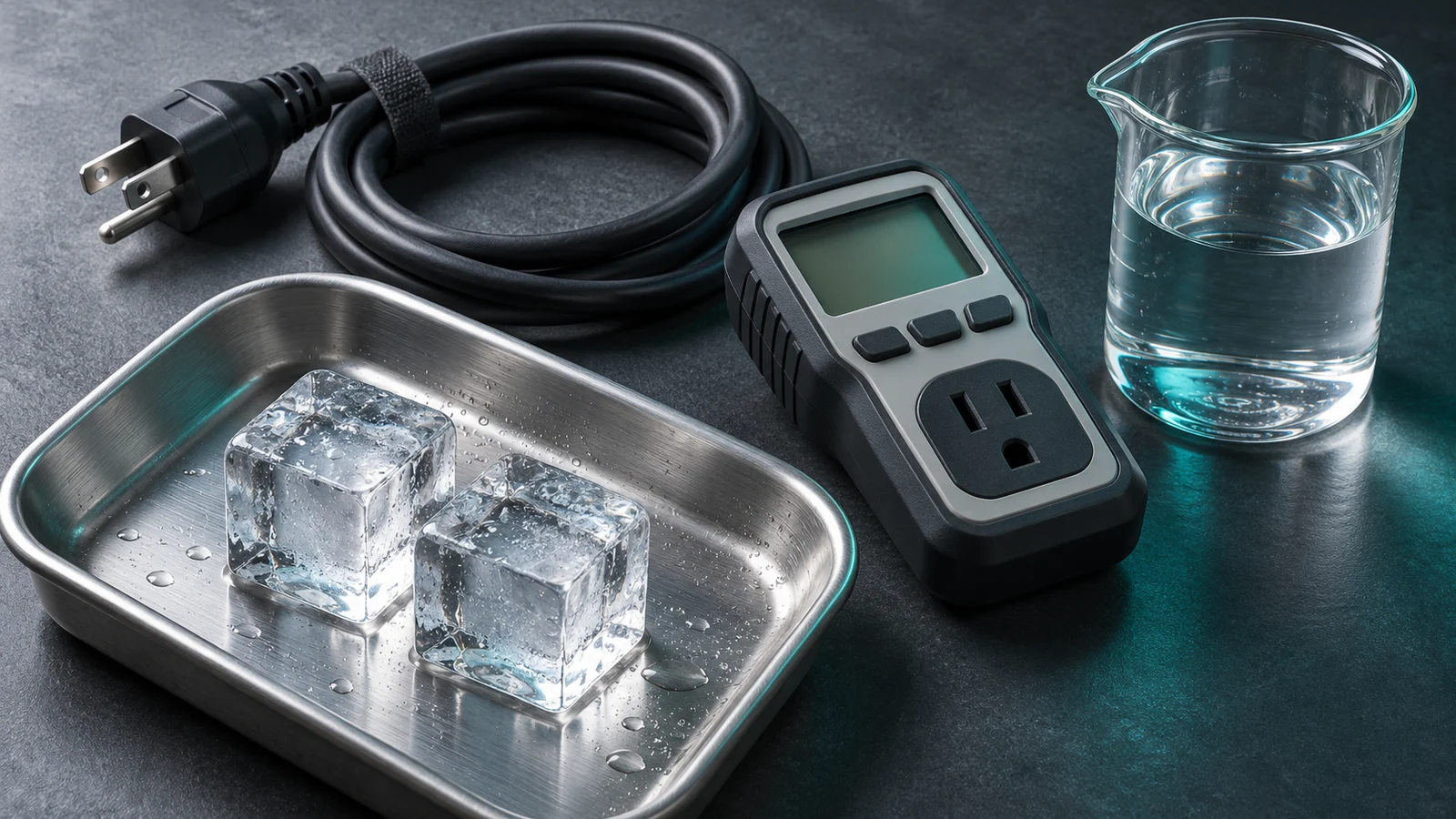
List the amount of ice actually produced in the reported period, the duration, stated air and inlet-water conditions, and the equipment the report covers. Identify which uses are included in the water number. For example, one quote may show water for making ice; in another, a separate line may cover condenser water. Compare like with like and identify any excluded use before adding figures together. Enter “not quoted” for a missing figure; zero is a measured value.
Rated electrical input in kW and electricity use in kWh answer different questions. A power value helps describe the load at a stated point, while the cost calculation needs energy over a period. Don't turn nameplate power into a daily bill by assuming the machine draws that power for every hour of the day.
Work the comparison using site rates
Illustrative example only: Both options produce 120 kg in 24 hours under the same stated conditions. The quoted energy and water figures cover the same scope. Use $0.20/kWh and $0.004/L as hypothetical rates.
| Over the same 24 hours | Option A | Option B |
|---|---|---|
| Electricity used | 12 kWh | 15 kWh |
| Water used | 240 L | 180 L |
| Electricity per 100 kg of ice | 10 kWh | 12.5 kWh |
| Water per 100 kg of ice | 200 L | 150 L |
| Electricity cost | $2.40 | $3.00 |
| Water cost | $0.96 | $0.72 |
| Combined cost for these two lines | $3.36 | $3.72 |
To calculate usage per 100 kg, divide usage by kilograms produced and multiply by 100. Option A uses 12 ÷ 120 × 100 = 10 kWh per 100 kg. For the daily cost, multiply each usage by its applicable rate. A water rate of $0.004/L is the same as $4 per cubic metre. If that rate rises to $0.012/L with the same electricity rate and no other charges, A costs $5.28 and B costs $5.16 for the day. The cheaper option changes while usage stays the same.
Put site works and scheduled service in separate budget lines, and specify the period you intend to compare. A data sheet without stated test conditions is a starting point: ask for a matching basis before projecting an annual bill. Use the quotation comparison guide to put each figure next to the configuration and conditions it describes.