
Private Label on a Selected Model
Use an existing ICES series as the starting point. Share the ice type, intended applications and preferred production range, then discuss the branding scope for the models you shortlist.
Explore the Product RangePRIVATE LABEL & BRAND PROJECTS
Build an ice machine offer around your brand, your customers and the requirements of your market. Start with the right equipment, then define the project scope with ICES.
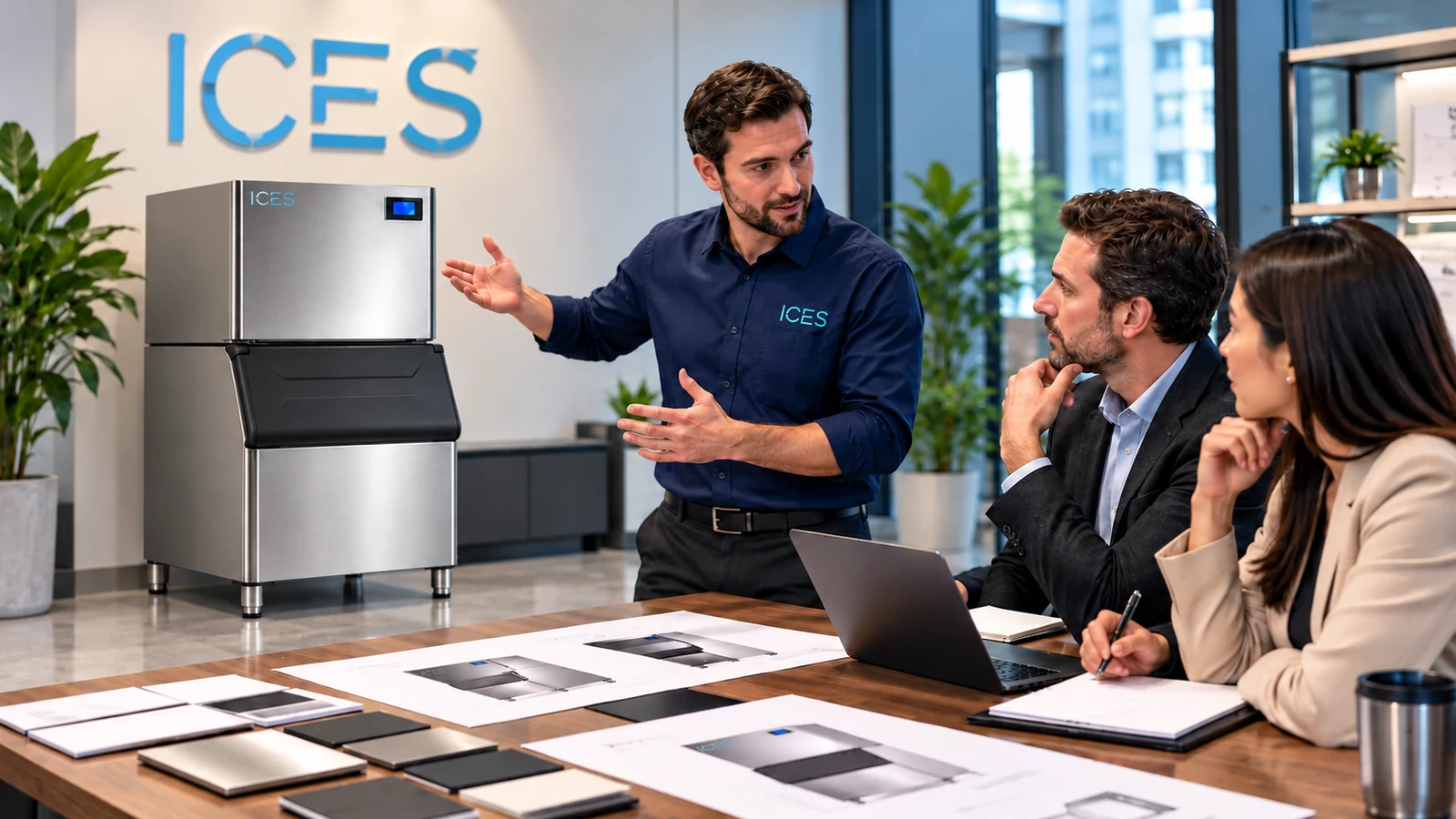
A logo is one part of an OEM ice machine project. Define the customer need, the proposed model and the version you intend to sell before approving the presentation.
Use an existing ICES series as the starting point. Share the ice type, intended applications and preferred production range, then discuss the branding scope for the models you shortlist.
Explore the Product RangeExplain the requirements behind a proposed change: installation space, electrical supply, customer operation or market positioning. Review feasibility and documentation before including the change in an offer.
Review the Scope ChecklistBring a written brief covering the intended product, differences from the available range and commercial context. A proposed development needs its own technical review, responsibilities and approval stages.
Discuss Your RequirementsUse a model-specific scope sheet so branding, configuration and documentation are reviewed together.
| Project Area | Bring to the Discussion | Agree Before Release |
|---|---|---|
| Brand presentation | Original logo artwork, brand colors, position preferences and any product naming requirements. | Artwork version, placement, size and application method on the proposed cabinet. |
| Product configuration | Ice sample expectations, intended use, power supply, installation constraints and requested differences. | Model and version, reviewed changes, relevant specifications and any effect on the quoted scope. |
| Packaging and literature | Proposed carton markings, language needs, product information and how the range will be presented. | Approved files, packing details and the information supplied with each selected model. |
| Identification and documents | Destination country, buyer requirements and documents requested for review. | Model-specific identification and relevant documents; brand artwork must not obscure technical labels. |
A visual mockup is an artwork reference. It does not establish that a configuration has been tested, a document applies, or a production order has been approved.
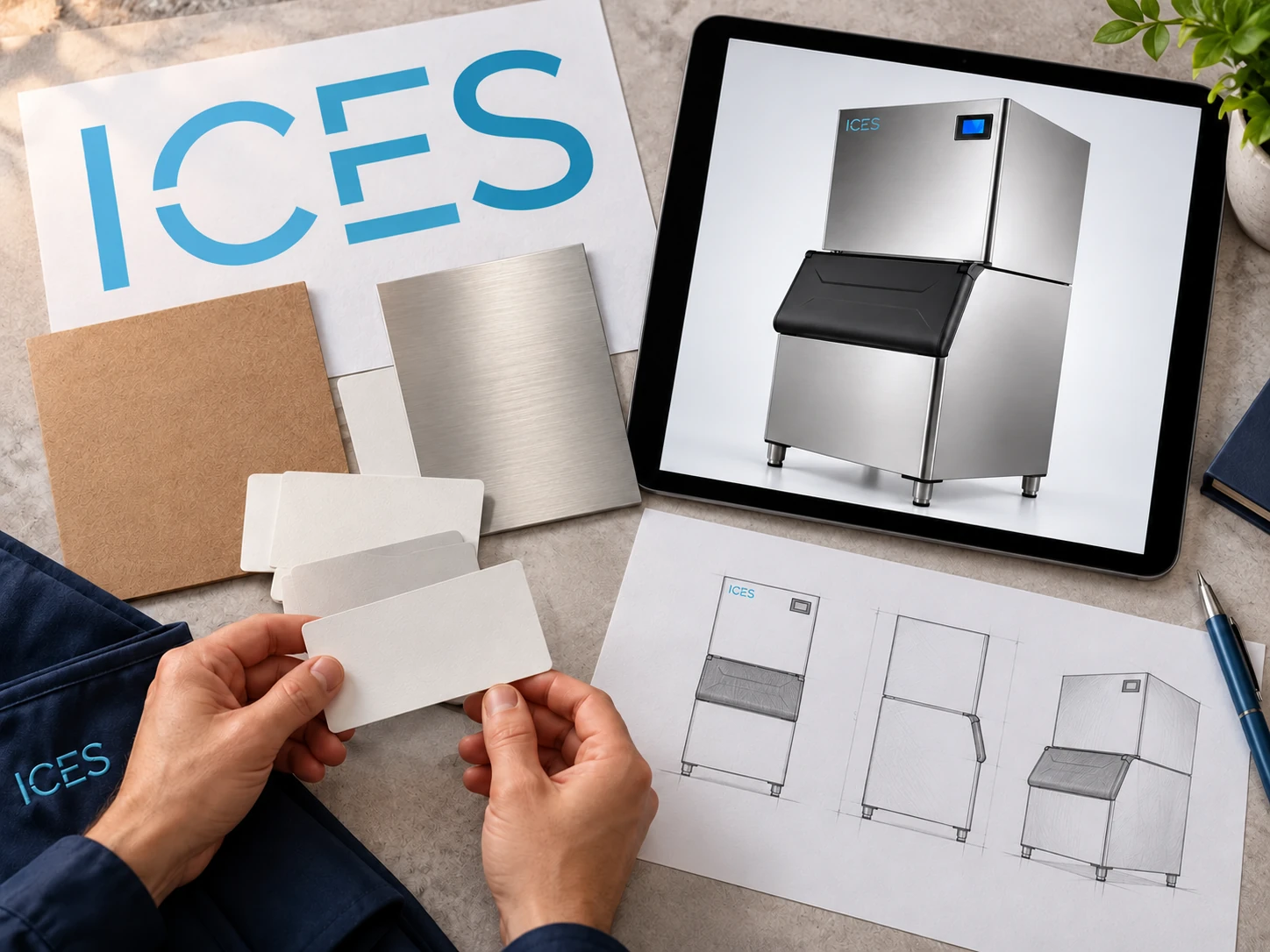
For an importer or brand owner, a useful approval file should explain what will be supplied, how it will appear and what supports the product description.
Connect the model, proposed configuration, ice format and supporting specifications. Keep a record of any agreed differences from the starting model.
Review the logo on the actual panel area, including its relationship to the screen, ventilation and access points. Keep the approved artwork version with the order.
Ask for approved product images and relevant instructions. Match the material to the selected version so sales literature does not promise a different machine or ice shape.
Agree a review process for your project before artwork or equipment changes are treated as final.
Identify your company, destination market, customer applications, ice types and estimated quantities. Include any reference artwork and installation requirements.
Discuss model selection and the requested scope. Request a quotation that separates equipment, branding, sample work, packaging and other agreed items.
Agree the sample and artwork review criteria. Record the selected version, observations, accepted files and any open issues before a bulk order is released.
Review quantities, packing, documents, inspection scope, shipping responsibilities and the proposed schedule. Retain the written approval record for both teams.
Share your models of interest, artwork and destination market. An identified requirement gives the quotation discussion a practical starting point.
Agree what should be checked and how the result will be recorded. Factory testing and shipment inspection answer different questions; ask for evidence linked to the equipment and order being reviewed.
Ask which production conditions and procedures apply to the proposed model. Keep nominal daily output separate from bin capacity and the demand at your customer site.
Compare the cabinet, artwork, packing and documents with the approved reference. Record any discrepancy before the proposed shipment is accepted.
Request the relevant installation, operation and maintenance information. Clarify how product questions and spare-part identification will be handled for the selected version.
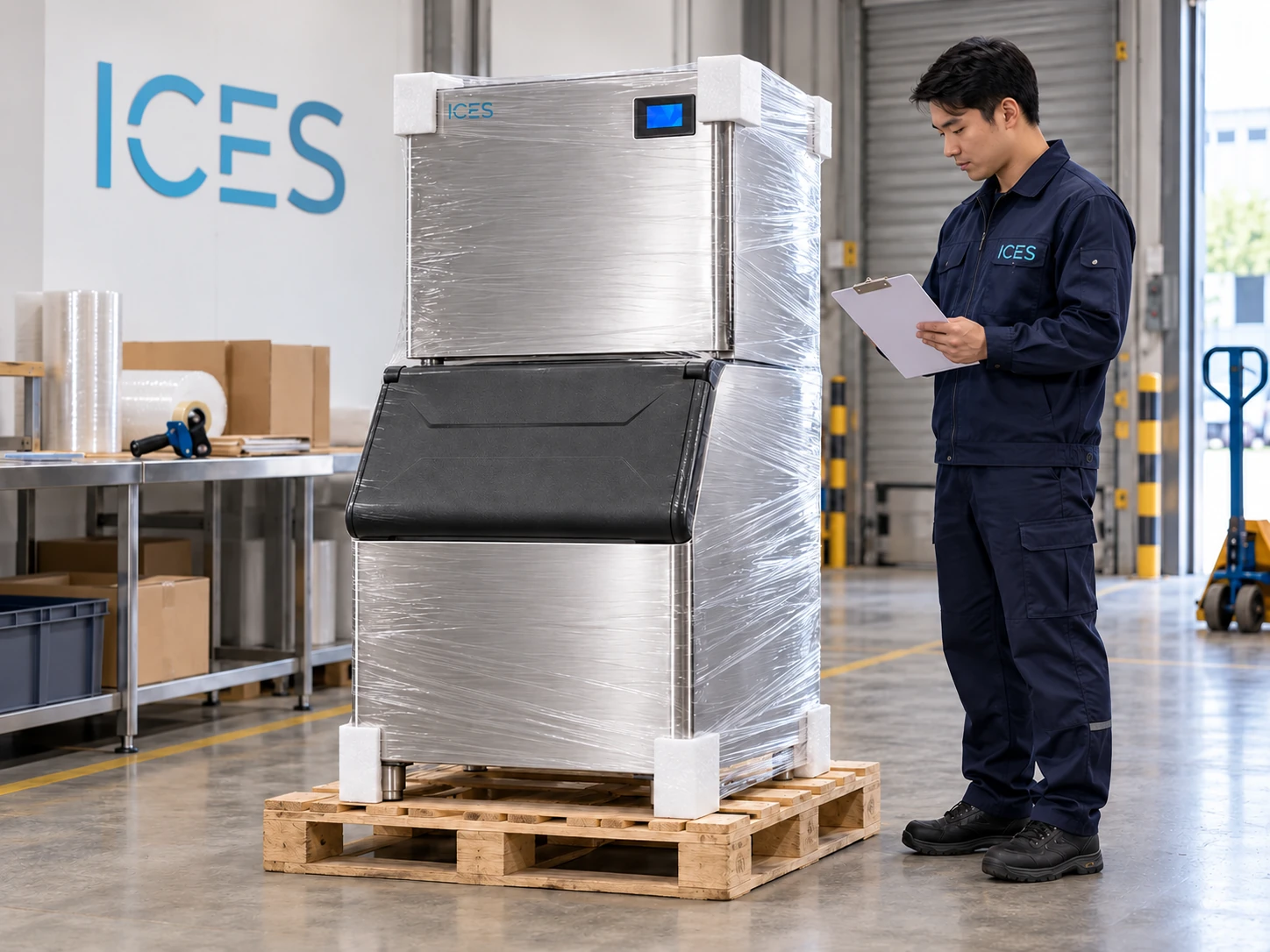
Share your artwork, proposed equipment and destination market. ICES can discuss branding options for the selected models. Confirm the proposed logo position, size, color, application method and any related charges in the project quotation and approval record.
An OEM discussion often starts with an existing model and a defined private label requirement. An ODM discussion may include a broader product or configuration brief. These terms alone do not define the scope: agree what can change, what needs review, who approves it and what is included in the quoted project.
Describe the change and why your market needs it. Feasibility must be reviewed against the selected model, performance requirements, documentation and order scope. A branding discussion does not imply that every cabinet, component, voltage or frequency option is available.
Request terms for the exact models, quantities, branding scope and proposed configuration. Sample arrangements, artwork work, packaging and production scheduling can affect a project. Obtain the applicable quantity terms, costs and estimated schedule in the quotation rather than using a general website figure.
Identify the proposed model and version, then agree what the sample review covers: ice format, appearance, relevant production conditions, installation needs, branding and supplied documents. Retain the observations and approved reference. A sample result should not be treated as approval of an undocumented later configuration.
Provide the country and intended application, then request the documents available for the proposed model and configuration. Review their scope, model identity and relevance before ordering. A document for another product or a general promotional image is not evidence for your selected equipment.
YOUR NEXT STEP
A concise brief is enough to begin. If a requirement is still undecided, identify it as an open question so it can be reviewed with the proposed equipment.
Company, website if available, destination country and the customers you plan to serve.
Preferred ice types, models or production ranges, applications and estimated quantities.
Artwork, packaging or language needs, requested changes and the reason for each requirement.
Sample expectations, documents needed, installation information and the intended purchasing timetable.
Practical reading for the purchasing decisions behind your project.
BUYING GUIDE
Define branding, development, sample approvals, and repeat-order controls in a private label project.
Read the GuideBUYING GUIDE
Make sample objectives, methods, recorded conditions, and approval limits clear before a bulk order.
Read the GuideBUYING GUIDE
Use a public RFQ template to share your market, application, quantity, and known configuration requirements.
Read the GuideIf your main task is selecting equipment for resale, start with the distributor cooperation page and build a range around your customers and service preparation.
Explore Distributor Cooperation