On this page
Introduction
A private label ice machine project can begin with a simple request: “Can you put our logo on the machine?” It can also involve cabinet appearance, documents, packaging, electrical configurations, software behavior, or a new product concept. Those requests require different levels of development, validation, and commercial agreement.
The labels OEM and ODM are useful starting points, but they do not define the complete arrangement. Two suppliers may use the same label for different scopes. A buyer therefore needs a written description of the work, not just a category name.
This guide is written for overseas importers, distributors, and brand teams. It does not promise a particular ICES customization scope, minimum order quantity, development price, or lead time.

1. Start with the business requirement, then choose the label
Ask what your brand needs to accomplish. Are you adding an established ice-machine category to a commercial equipment range? Replacing an existing supplier? Preparing a product for a particular installation environment? Developing a distinctive user-facing feature?
A clear business objective helps separate necessary work from optional changes. If your customers need a documented electrical configuration and understandable manuals, a cabinet color change will not solve the central purchasing issue.
Describe the intended customer, destination market, application, ice form, initial quantity, and repeat-order expectations. Identify which requirements are essential for launch and which could wait for a later version.
This information gives the manufacturer a basis for explaining what can be supplied from an existing platform and what requires further investigation.
A practical first question
Ask: “Which parts of our requirement can be met by an existing proposed model, and which would require changes, new verification, or additional commercial agreement?”
That question is more productive than assuming one cooperation label guarantees every capability.
2. Understand OEM and ODM as working descriptions
In common procurement usage, an OEM arrangement can involve a manufacturer producing equipment against a buyer-defined specification. An ODM arrangement can involve a manufacturer offering or developing a design that the buyer markets under its own brand.
Actual projects often sit between these descriptions. An existing model with a buyer logo may be called OEM by one supplier and private label by another. A modified platform may be described as ODM even when most of the underlying design remains unchanged.
The important issue is the defined work. Ask who specifies the product, who approves changes, which design elements already exist, and which deliverables are included.
Do not infer ownership or exclusivity from the words alone. A quotation marked “ODM” does not, by itself, establish who may use a design, who controls source files, or whether similar equipment can be sold to other buyers.
These matters need an explicit agreement appropriate to the project.
3. Separate branding from engineering changes
Classify the requested change before discussing quantity or timing. The following routes describe project scope, not guaranteed ICES options or a legal definition of OEM and ODM. A logo request can use an established platform; a dimension or control change needs a separate feasibility decision.
| Project route | Buyer input | Approval focus |
|---|---|---|
| Brand presentation | Selected model, logo file, position and packaging brief | Artwork proof and the identity of the unchanged base product |
| Configuration request | Site requirement and exact difference from the base model | Feasibility, applicable documents and the offered version |
| Design development | Functional brief, constraints and expected deliverables | Development scope, validation, usage rights and change approval |
If one project contains all three routes, separate their approval items. Approving a logo proof does not approve a changed electrical system. Bring the scope to the ICES OEM and ODM project page with the selected ice category.
4. Establish the base model and product identity
Identify the equipment before discussing how it will carry your brand. Record the base model, ice type, nominal production and stated conditions, storage arrangement, proposed electrical version, dimensions, and applicable documents.
Use the ICES catalog and product overview to start a category discussion. A private label request should then refer to a proposed version, rather than to an unspecified machine in a marketing image.
Clarify how your buyer-facing model reference will relate to the manufacturer's internal reference. Both may be needed for procurement, shipment records, parts identification, and service support.
If a marketing name remains the same while components or configurations change, agree on a version or serial-based method for distinguishing them. A recognizable brand name should not erase the technical identity needed to support the equipment.
This relationship becomes especially important when repeat orders enter your market over several years.
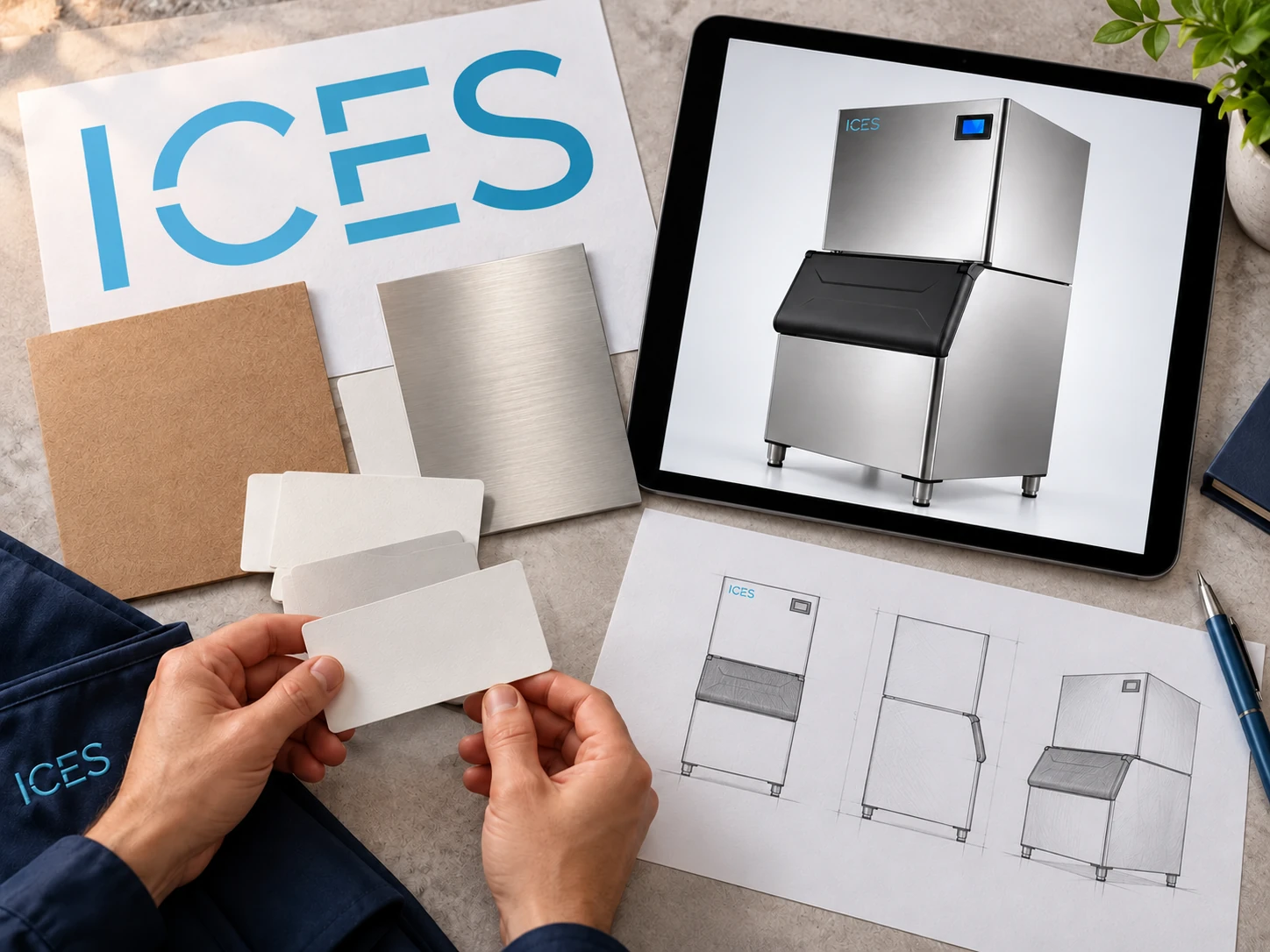
5. Prepare an artwork and document approval package
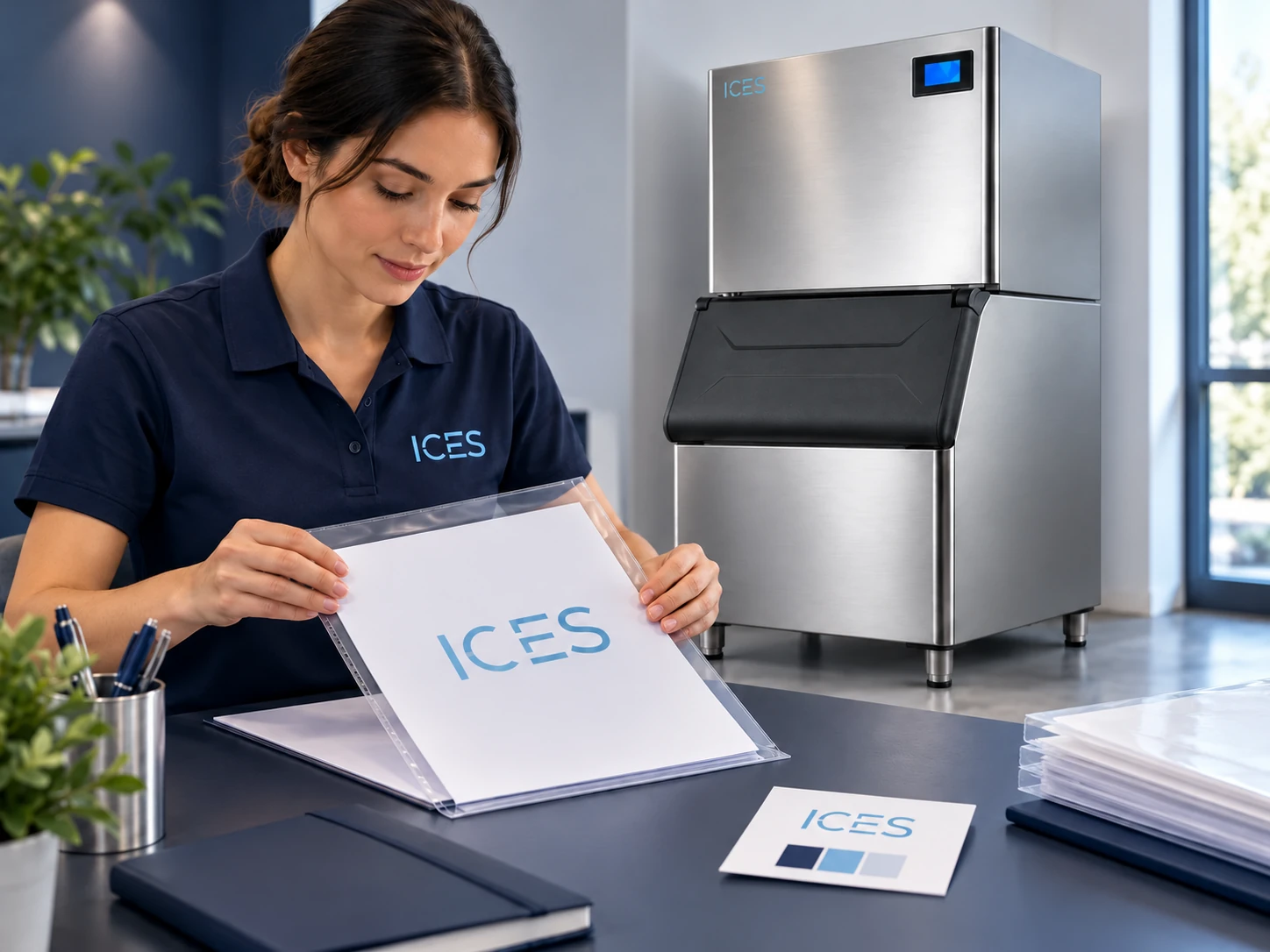
Supply a usable logo reference and explain where it should appear. Request a layout proof showing the proposed placement and size before approving production.
Keep decorative branding separate from required equipment identification. Do not remove, obscure, or alter technical and regulatory information merely to create a cleaner visual appearance. The relevant requirements should be reviewed for the destination and proposed model.
For packaging, identify the artwork version, product reference, language, marks, and any variable information. Ask which details will be printed, applied as a label, or added at packing.
For manuals and sales sheets, assign responsibility for technical accuracy, translation, layout, and approval. A polished brochure can still be misleading if it mixes dimensions or output figures from different versions.
Use a document register. It should identify each file, revision, intended use, approver, and approval date. This is a proposed control method, not a claim that a specific supplier already uses your preferred system.
6. Define development deliverables before discussing timing
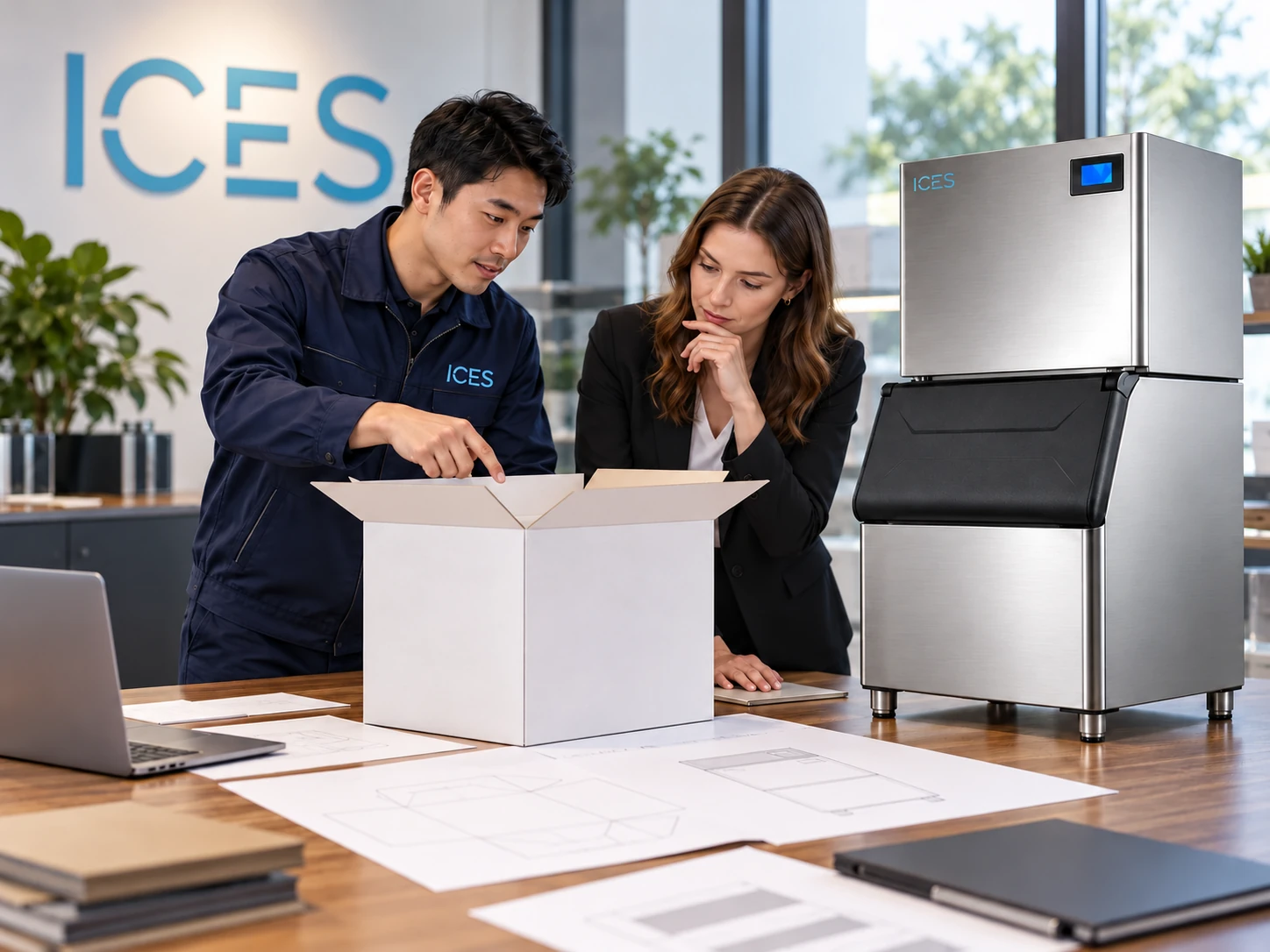
A request for a change should produce a defined proposal. Depending on the project, the deliverables might include a feasibility response, revised specification, appearance proof, prototype, test plan, sample, or updated document.
Ask which deliverables are included in the quotation and which require a separate decision. Identify any buyer inputs needed before the manufacturer can proceed.
Discuss sequence rather than assuming a fixed development time. An artwork proof, a changed physical part, and a new functional requirement can follow different approval paths. Supplier workload, material availability, and unresolved buyer decisions may also affect the schedule.
Keep requested launch dates visible, but distinguish a buyer target from an agreed supplier commitment. Record dependencies so that both teams understand what could delay approval.
7. Agree on sample approval and change control
Define what the sample is intended to prove. A branding sample may demonstrate logo placement and packaging appearance. A functional sample may need a broader evaluation plan for the proposed configuration.
Record differences between the sample and the intended bulk product. A temporary label, substitute part, or unfinished document should be identified before approval, not discovered when the order arrives.
Use an approval record that states what has been accepted and which points remain open. Approval of an external appearance should not automatically approve an unreviewed electrical version or performance claim.
After approval, changes should be identifiable. Ask how the supplier will communicate a proposed substitution, document revision, or configuration change and which changes require buyer approval.
A repeat order should refer to the approved product definition and its current revision. “Same as last time” is convenient language, but insufficient when the previous order contained several different configurations.
8. Discuss design usage, confidentiality, and exclusivity explicitly
Separate your own brand assets from the manufacturer's existing platform and any project-specific development. Identify what each party contributes and which files or designs the buyer expects to receive.
If exclusivity matters, describe its intended scope: the relevant product, territory, channel, duration, and conditions. Do not assume that paying for artwork or buying a sample creates exclusive rights to an entire product family.
Similarly, a request for confidentiality should identify the information concerned and the parties allowed to access it. Development drawings, pricing, customer data, and brand artwork may need different handling arrangements.
These are matters to document with suitable commercial and legal support. This article does not determine intellectual-property ownership or provide a universal contract clause.
The purchasing lesson is simple: make the expected rights and deliverables visible while the project is still being scoped, rather than relying on a cooperation acronym.
9. Confirm destination evidence and product claims
A new logo does not make every product claim acceptable for every market. Review the exact model, configuration, accompanying documents, and intended claims before preparing your launch material.
Ask which evidence is available for the proposed version and how the scope can be checked. Do not reproduce certification marks from an unrelated model or treat a catalog symbol as confirmation of a destination-specific requirement.
Marketing translations also need technical review. Terms such as “solid,” “flake,” or “nugget” should match the actual ice. ICES cylindrical ice, for example, is individually formed and solid; replacing its description with “hollow tube ice” would change the represented product.
Avoid unverified claims about energy savings, service life, production in hot conditions, or suitability for specialist applications. If you need a claim to support sales, agree on an appropriate evidence plan before using it.
10. Plan packaging, shipment, and distributor support together
A branded product reaches the buyer as a combination of equipment, packaging, documents, and support information. Review that combination before bulk shipment.
Check that the product reference on the carton relates to the equipment identity and the order. Confirm the included accessories and the applicable manual revision. For mixed orders, define how different versions will be distinguished during receiving.
Discuss how the distributor will identify parts and communicate service questions. Your brand's public model name may need to be linked internally to a manufacturing reference or version record.
Any warranty, parts supply, training, or service commitments should be written for the actual cooperation arrangement. Do not infer local service coverage or a response-time promise from the presence of your logo.
The distributor service planning guide provides a separate checklist for building that support process.
11. Use staged decisions rather than one broad approval
A private label project becomes easier to manage when approval is divided into understandable stages:
- Requirement and base-product confirmation.
- Feasibility and commercial scope.
- Artwork, document, and configuration review.
- Sample evaluation and issue closure.
- Final product definition for the order.
- Agreed shipment verification and repeat-order controls.
The stages can be combined for a simple project. The important point is that the approval record explains what the buyer accepted.
Use a change log even when the project feels straightforward. A revised carton, translated manual, or updated component can affect receiving, sales, and service teams differently. A short record helps those teams work from the same version.
No universal minimum order, development fee, or schedule follows from this workflow. Those details depend on the actual proposal and agreement.
12. A hypothetical private label launch review
Consider a distributor adding a crescent-ice machine to its beverage-equipment range. The buyer initially requests a logo, branded carton, and translated manual. During review, it also asks for a different cabinet height.
Those requests should not remain one line called “OEM service.” The branding and document work need approved files. The height request needs separate feasibility review, a revised product definition, and whatever verification the change requires.
The team can then decide whether to keep the established platform for the first order or evaluate a modified version separately. This is an illustrative decision process, not a report of an actual customer project or an ICES development capability.
Keep the launch information consistent across teams
A private label launch usually involves more than the buyer and the factory contact. Sales staff need accurate claims, receiving staff need recognizable references, and service partners need applicable technical records.
FAQ
Is private label the same as OEM?
The terms can overlap in commercial use, but private label mainly describes selling equipment under the buyer's brand. OEM may describe a broader manufacturing arrangement. Confirm the actual supplied work rather than relying on the label.
Does ODM mean that the buyer owns the design?
No ownership conclusion should be drawn from the acronym. Identify pre-existing designs, project-specific work, deliverable files, and permitted uses in the relevant agreement, with suitable advice where needed.
Can an existing ice machine be branded without changing its engineering?
A project may focus on branding and documents, but the available scope depends on the proposed supplier and model. Ask which changes can be considered and how approvals will be recorded. Do not assume every item is available.
What determines the minimum quantity and development time?
The requested scope, materials, production arrangements, validation needs, and commercial agreement can all matter. Request a project-specific proposal instead of applying a general online figure to every machine.
What should be approved before a bulk order?
At minimum, identify the agreed product version, branding files, included documents, supplied scope, and unresolved exceptions. Where samples or testing are part of the plan, retain the applicable approval and issue-closure records.
Can a brand change the model name?
A buyer-facing reference may be discussed, but the equipment still needs traceable technical identification. Agree on the relationship between the public reference and the records used for supply, parts, and service.
Conclusion
OEM and ODM are useful conversation starters. A successful private label procurement process depends on a defined product, a clear change scope, documented approvals, and an understandable support arrangement. Build the project around those decisions before treating a cooperation label as a complete specification.