On this page
Introduction
Before approving a modular ice machine quote, match the head and bin references to a drawing or written pairing confirmation, then check how much ice the crew can access when they need it. A quote can identify the ice-making head and show a bin in the picture while leaving the bin out of the price. It can also state both capacities and still leave a gap in service if those figures do not describe ice available at the time of withdrawal.
If you are still choosing between one cabinet and a separate head and bin, start with the equipment layout comparison. Use this checklist once someone has quoted a specific combination.
Read the line items before comparing the total
Take the head model and configuration from the quotation. Write down the bin model or drawing reference on a separate line. For each line, record whether it is included, priced separately, supplied by the buyer or still open. Use the same treatment for the base or legs, any adapter required for that pairing, and any other item the proposal relies on.
If “bin included” appears without a bin reference, ask the supplier to identify the bin in the written quote. That reference needs to match the storage figure and the drawing used to verify the proposal. If a bin is supplied separately, establish who is responsible for confirming the fit and providing any interface parts. This gives purchasing a basis for comparing complete supplies in the commercial ice machine quote guide.
Match the pair to one drawing and one quote revision
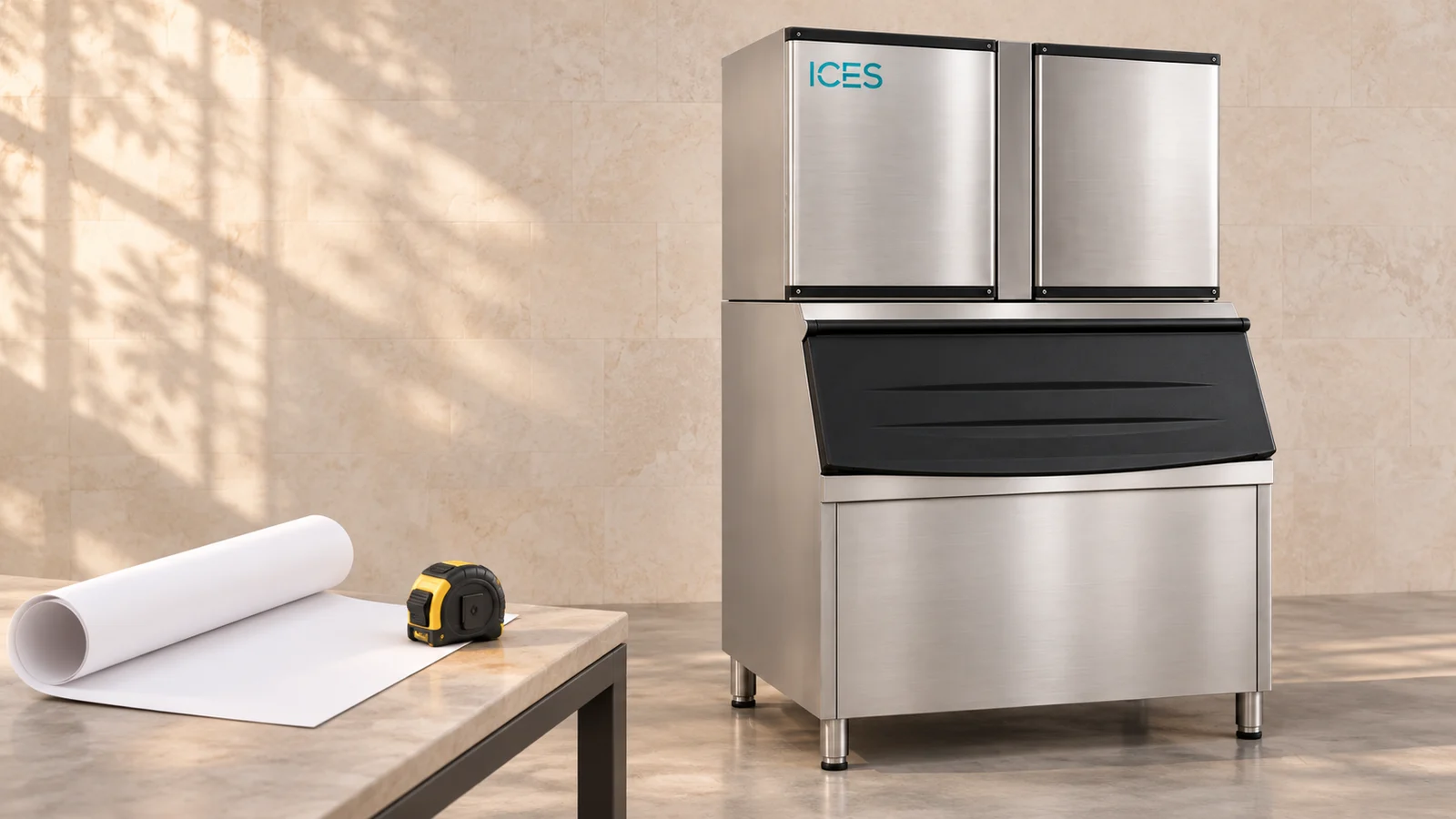
Use a pairing table, an assembly drawing or written confirmation from the supplier that identifies the exact machine and bin. Match the model and revision on the document to the quote. The evidence needs to cover where the ice falls, how the head is supported or mounted, and the approved parts where the two meet. Check any bin control connection described for that configuration. A matching outside width leaves those questions open.
Read the assembled dimensions including the base or legs where specified. Compare that drawing with the actual space after surrounding counters and shelves are in place. Mark the bin opening and scoop point, the clearances listed for the combination and where the installer will check drainage and service access. Bring the assembly drawing into the pre-order site checklist so the site team uses the same references as purchasing.
Put usable ice on the service clock
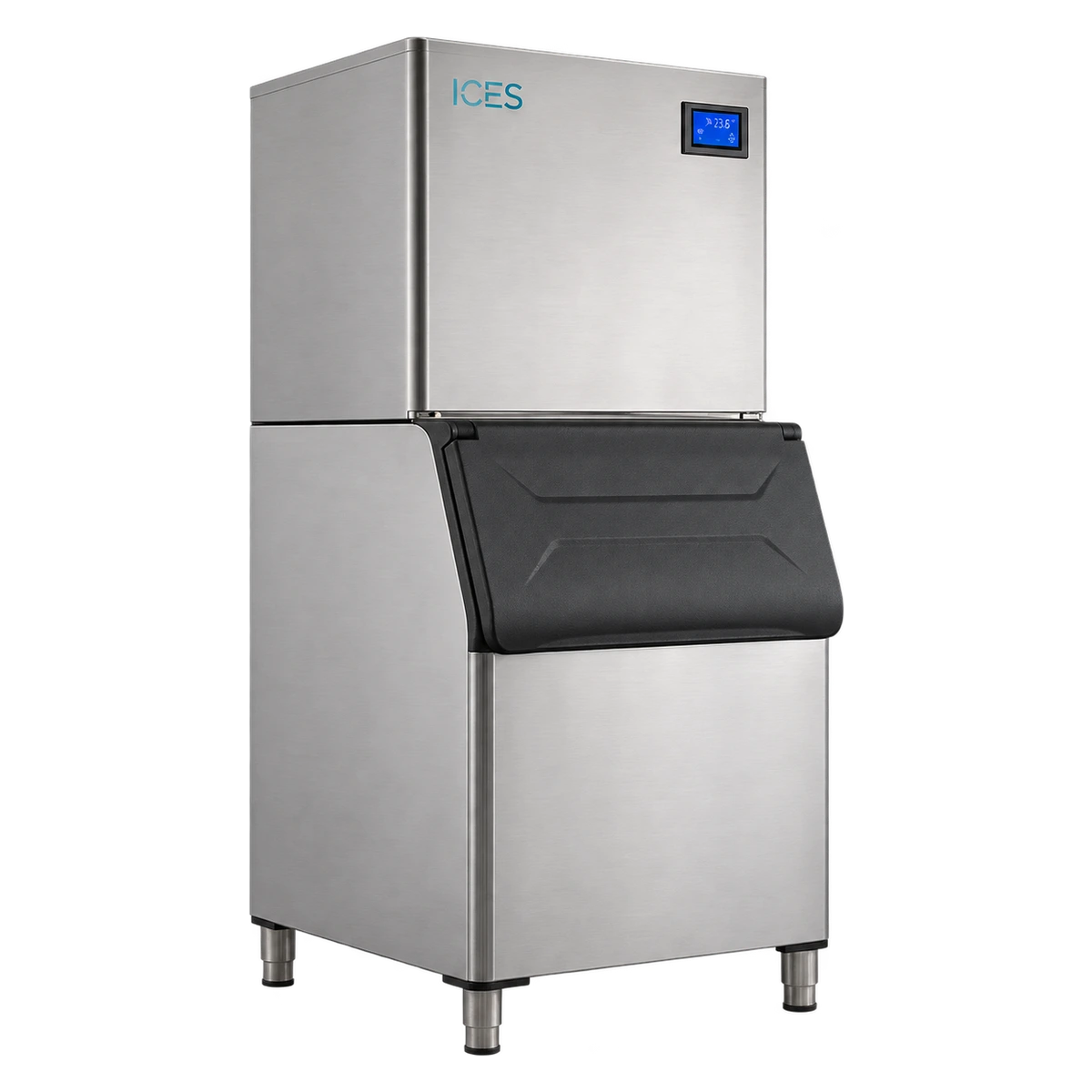
Copy the head's stated production in kg/24h and the rating conditions. Record the bin's stated storage in kg on a separate line, with the source and the basis used for the stated figure if available. Then record the amount expected to be ready and reachable at the first withdrawal. If part of the stored ice cannot be scooped with the crew's setup, use the amount they can reach in the service estimate.
For the busiest window, count an addition only after it has arrived in the bin and can be scooped. A daily production figure divided by 24 does not tell you when ice cycles finish, how much was already in the bin, or when an operator can collect it. If you have no reliable evidence for an addition during a short service window, test the quote with zero additions during that window.
Teaching example. A bar and a banquet station need 30 kg and 20 kg before a reliable refill. The proposed bin opens with 45 kg of usable ice. That leaves a 5 kg shortfall in the window. If 10 kg is confirmed to become accessible after the first withdrawal and before the second, 45 − 30 + 10 − 20 leaves 5 kg at the end. If the 10 kg arrives after the second withdrawal, the shortfall still occurs. These quantities illustrate the timing check and carry no equipment rating.
Record the shortfall at the withdrawal where it occurs. Then compare changes the operator can actually make, such as holding more ready ice when service starts or moving a refill earlier. For a seafood counter with a first fill and later top-ups, use the timed flake ice worksheet to record withdrawals individually.
Copy this into the quote review
Use one row per check in a purchasing email or order review. Mark missing items Open and note who will close them.
| Check | What to attach or record | When the quote can move forward |
|---|---|---|
| Head and bin | Exact head model and configuration, bin or drawing reference, quote revision | Both components are identifiable in the written proposal. |
| Supply scope | Each component and required accessory, who supplies it and how it is priced | The price comparison includes a complete configuration on the same basis. |
| Pairing | Pairing sheet, matching drawing or written model-specific confirmation | The supplier has identified how the quoted parts go together, including any required interface components. |
| Storage and use | Stated and expected usable storage, first ice ready, timed withdrawals and supported additions | Every withdrawal can be met at its scheduled time in the planning check. |
| Assembled fit | Complete dimensions, bin access and the installer’s site check | The site team has evaluated the exact assembly for fit, operation and access. |
Hold approval of the proposed combination if the pairing confirmation or the drawing for the full assembly is still missing. Ask the supplier responsible for the complete configuration to provide the missing record.
If a supplier substitutes a head, bin or base before the order, return to the affected rows and issue the review against the revised quote. To review an ICES proposal, send ICES the quoted component references, site sketch and peak withdrawal schedule. If one of the references is still missing, include the relevant quote line so it can be identified.